

The first time I watched a friend lose her phone at a festival, it never even hit the ground, and that is the part that stuck with me. It slipped out of her hand, bounced off a stranger's shoulder, and another stranger caught it on the back of his hand like it was a beach ball. She got lucky, and then she spent the whole rest of the night gripping that phone in both hands. Which meant she could not dance. She could not hold her water. She could not take a picture without putting every person around us in the frame. It was the loudest lesson I have ever gotten sitting perfectly still.
I am Heidi, a retired show-goer who has been through a hundred Bay Area nights, and I have stopped trusting my hands to hold what matters most. A phone lanyard is not a gadget for the young crowd. It is the two dollar peace of mind between your phone and a sea of people, and it is exactly the fix I bought the CACOE phone lanyard to make. The whole skill is in how you attach it. Attach it wrong and it swings and pulls at your neck all night. Attach it right and it disappears until the exact second you want it. Here is how I set mine up, step by step, so it has never cost me a single song.
The Lanyard That Keeps Your Phone at Your Chest, Not in the Crowd
After one near miss in a packed crowd, I attached the CACOE phone lanyard to my everyday case and it has carried my phone through drizzle, dancing and packed corridors ever since. Two come in a pack, so one rides on the case and one stays in the show bag, always ready for the next night out.
Amazon Check Today's Price on Amazon →Step 1: Attach the Connector to the Case, Not to the Phone
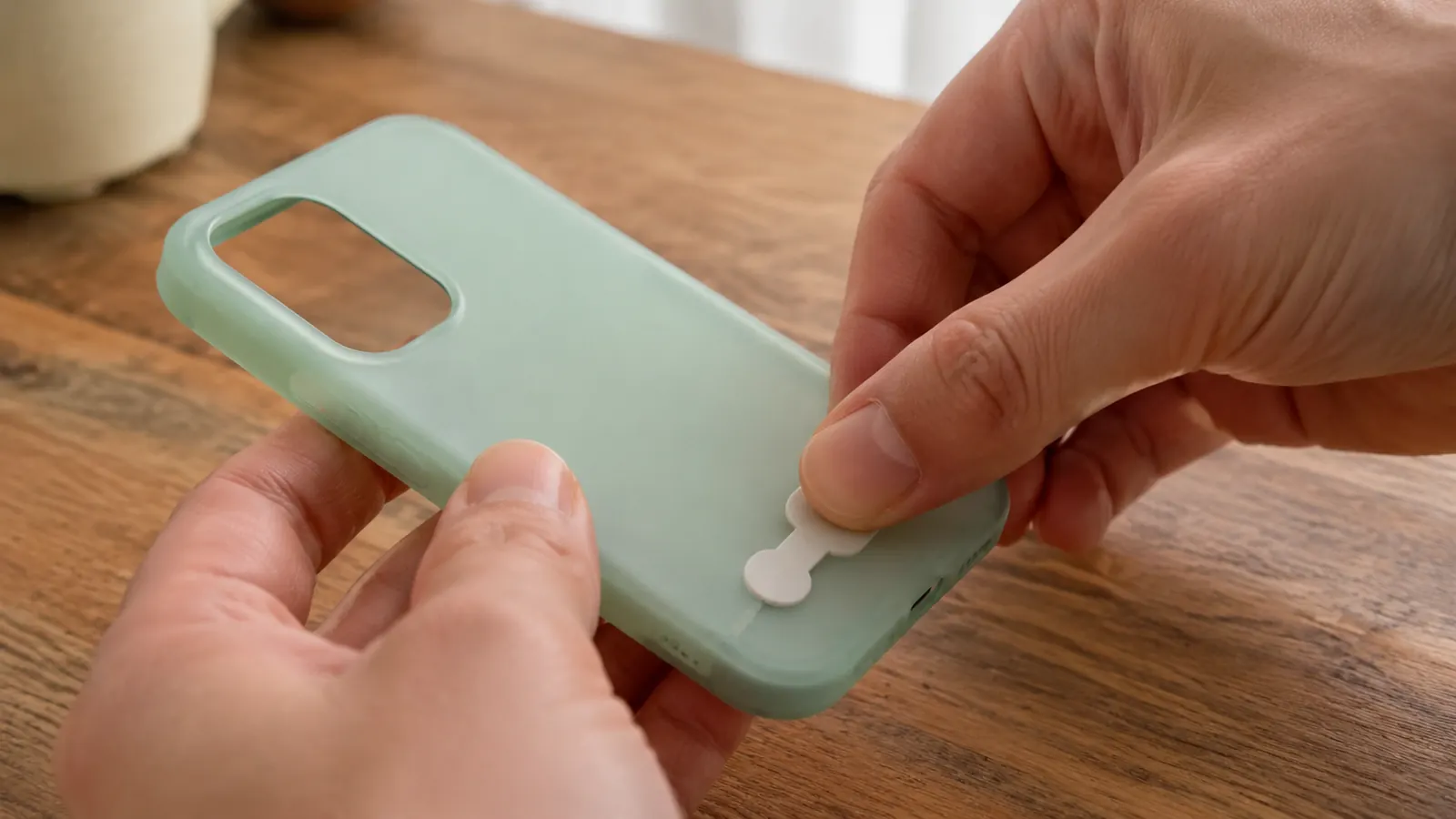
The first thing to know is that the lanyard does not go through your phone, and it does not stick to the glass back. The CACOE phone lanyard carries a small flat connector tab that rides on the back of the case, and that case is exactly where it belongs. You are attaching a loop to the shell you already protect the phone with. Nothing ever gets glued to the phone itself, and the whole thing comes off clean the day you want a bare case again.
Do this at a flat kitchen table at home, not in the car and not squeezed between two seats while the opening act plays. Take the case off the phone if you can, because a clean and level back is far easier to press against than one already on the device. Put the tab low on the back, lower than it feels natural, which keeps it clear of the camera and keeps your fingers out of the way the whole time you wrap a hand around the phone. You are going to live with this tab for the whole season, so spend the ten seconds to set it somewhere flat and neat.
Wipe that one spot with a dry cloth so the adhesive has clean plastic to bite into. Then warm the tab between your palms for a few seconds before you press it down. It is the same patience trick that keeps a screen protector from peeling, and it is often the whole difference between a tab that stays for a year and one that slips off on the first hot afternoon. If you carry more than one phone, set each one up on its own case the same afternoon, so no matter which phone is in your hand the lanyard is already attached and waiting.
Step 2: Press Firm and Let It Set Before You Swing It
Here is the step everyone skips, and it is the one that decides whether the whole lanyard works. Press the connector into the spot you cleaned and hold it there with steady thumb pressure for a full thirty counted seconds. Not two seconds and done. A deliberate slow count beats a quick jab, because the adhesive needs time and pressure together to bond with the plastic, and both come only when you actually hold still.
Then leave the phone flat on the table for an hour, and overnight is even better. The adhesive sets in that quiet stretch in a way it never does if you press it on and immediately start swinging the phone around on its lanyard. Patience here is the entire game. A tab that sets properly is the reason your phone stays put at your chest through the happy arms-up dance and the startled jump of a surprise encore, instead of popping free and sailing into the dark at the worst moment.
When the hour is done, give the tab a gentle pull from one side. If it holds firm and does not lift at any corner, you are ready for the strap. If it peels up anywhere, wipe the spot again, warm the tab once more and press a second time. Forty seconds now is far cheaper than an hour of worry later, and it is the one place I never rush.
Step 3: Thread the Strap and Close It Through the Tab
Now the actual lanyard. The CACOE lanyard is a long, thin loop that threads through the tab and pulls back on itself until it sits snug. This is the step that trips people up, because there are two directions to pull and only one of them ends with a secure cinch. The good news is that you cannot break anything, you can only restring it.
Hold the loop open, slide one end through the slot on the tab, and thread it until the tab sits at the middle of the loop rather than at an end. Then pull it snug so the connector is centered and you feel the strap lock tight around it. You want the tab riding at your collar line, so the phone hangs just below your collarbone when you wear it. That placement keeps it high enough for the crowd and low enough to stay out of your own arms.
Test it before you trust it. Give the phone a gentle downward tug while the strap is slack. If the tab holds and the strap stays put, you did it right. If the strap slips through or the tab lets go, undo it, reset the tab flat and thread it once more. That one minute is the whole difference between a lanyard that carries your phone all night and a sad swing you worry about through the entire set.

Step 4: Set the Length for Your Height and Your Kind of Show
How long the lanyard hangs is the difference between a comfort and a nagging annoyance. Too long and the phone swings into your chest and bounces with every step. Too short and it rides up around your throat and pulls the moment you turn to talk to the person beside you.
Catch the small slide on the strap, the little barrel you pinch and move along the cord, and shift it until the phone rests around your mid chest, about where a heart sits under a coat. That is the sweet spot for a standing show, high enough to stay out of a busy crowd's reach and low enough that it never presses on your neck when you stand still.
Then test both directions once at home. For a seated amphitheater night you might want it a little shorter so it sits calm against your chest for the whole set. For a standing, dancing festival, a touch longer gives your arms room to move without it swinging up into your face. Adjust it where the light is on. There is no elegant way to fiddle with it in the dark while the whole line stands apart.
One more note while you are here: most of these straps have a little pull tab you can tug to loosen and re-adjust on the fly. Learn where that pull is before the show, the same way you learn where your friend's parking spot is. On a fifteen minute break between sets you might want the phone a touch higher for the bathroom and a touch lower back at your seat, and knowing the release by feel lets you fix it in the dark without ever reaching for it.
Step 5: The Habit Test, Wear It Around Before You Need It
Spend a calm hour wearing the lanyard around the house and then go for a real walk with it on. Go to the store, wander the block, do an ordinary errand, so your shoulder and your hands learn the weight and the small swing. Your brain will stop noticing it, and that is exactly the goal. A phone on a lanyard that you forget is a phone you cannot drop.
And build the habit of putting the phone into the lanyard the moment you step out of the car, not the first time you reach for it in line and find nothing. I run it side by side with a clear crossbody bag, so my phone is either on the lanyard or in the bag, and it is never loose in my hand where it can get knocked loose, and never set down on a seat where it might not come back to me.
Do it twice on a warm summer walk and it becomes second nature before the first show day even arrives. By the time the lights go down you reach for the phone, it is right there at your chest, and you will not spare a single thought for the old nights of gripping it in a damp palm through the whole set.
What Else Helps Once the Phone Is Secure
A secure phone solves the hands problem, but a long show day has a few other quiet wells. A clear crossbody bag for your cards and cash, a small power bank so the phone still has charge for the picture at the encore, and a good pair of earplugs for the loud half of the night. The lanyard however is the piece you will reach for the most, because the phone is the one thing you actually use.
You do not need all of it on every show, and you should not buy it all at once. Start with the lanyard, which is the portion that earns its keep the fastest because the phone is the object you will touch a hundred times a night. Attach it once, wear it twice, and the show stops being a game of digging the phone out of a bag at the worst possible second and becomes a warm, easy, hands-free set.
The rest of the kit can grow with you. Once the phone is safe and your hands are free you discover which of the other small things you actually reach for, and you add those one at a time rather than carrying a bag full of gear you never open. For most of us, the lanyard and the clear bag are the two that go to every single show, and the rest stay home as the need arises.
The phone is the one thing I absolutely have to keep through a whole show. Once I had the CACOE lanyard on the case and wore it around the house for an afternoon, it became the most boring, reliable piece in my concert bag. And boring is the highest praise I give any gear before a night out.
Give Your Phone a Spot That Never Involves Your Hands
The CACOE phone lanyard comes two to a pack, so one rides on my everyday case and one waits in the gear bag for the next night out. After a full season of drizzle, festivals and packed crowds, mine has never let a phone so much as slip. If a hands-free show day sounds good to you, this is the lanyard that did it for me.
Amazon Check Today's Price on Amazon →