
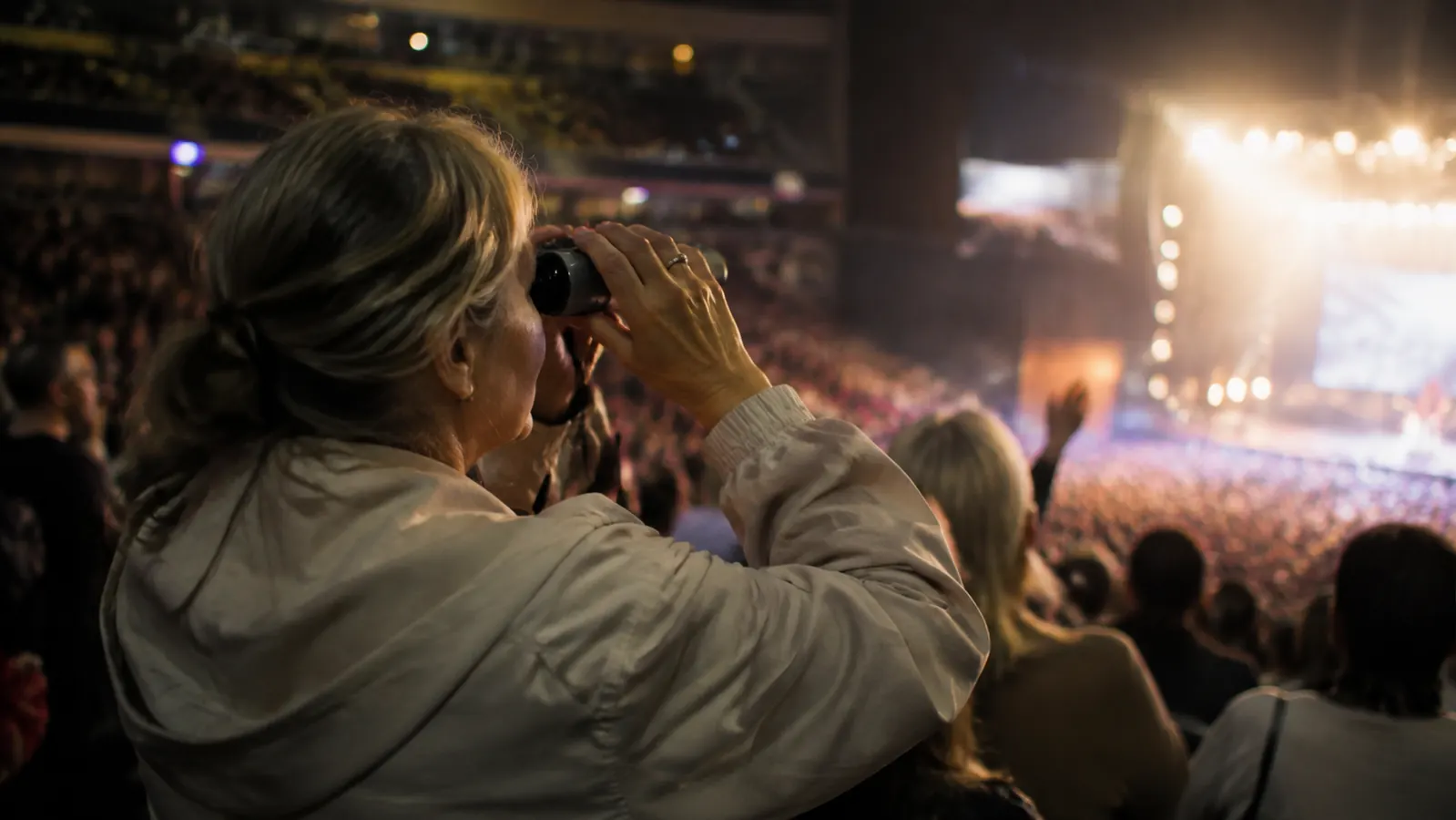
We had what my friend called great seats: row U, halfway up, dead center at the Shoreline Amphitheater in Mountain View. The band opened, the lights came down, and the lead singer was a face the size of my thumbnail. That was the night I stopped pretending I could watch a big show with my own two good eyes. I am sixty, I go to a lot of shows, and I finally bought a compact pair, the occer 12x25, and learned to shop binoculars the way it actually matters for a concert, not like a birdwatcher.
So here is the honest truth first: most people grab the wrong pair because they shop by the biggest number on the box. That is exactly backwards. For a big arena or an amphitheater, the right compact binocular at eye level beats a giant zoom lens you will leave in the car. This is the thinking I wish someone had handed me, the numbers that matter, the one about shaking, what light does, and what fits in a venue bag without wrecking your night. I will point you to the pair I use the most, the occer compact, but only after the reasons make sense for your own seat.
The Compact Pair I Reach For at Every Big Show
When I finally stopped fumbling, I nosed around and landed on the occer 12x25 compact binoculars. They are light enough to live in the bottom of my venue bag, give me a bright view of a lit stage, and I have taken them to about a dozen houses since. This is the pair I reach for during the night, which is the point of all of this.
Amazon Check Today's Price on Amazon →Step 1: Start With the First Number, the Magnification
The two numbers printed on every binocular, like 12x25, tell you nearly all you need. The first number is the magnification, how many times closer things appear. A 12x pair makes that distant singer look twelve times nearer, which on a big stage is the whole difference between a face and a smudge. For the back two thirds of most arenas and amphitheaters, somewhere between 8x and 12x is the honest sweet spot.
Here is the trap. A 16x or 20x number sounds impressive, so people grab it, then the shake makes it useless. The higher you go, the more every sway in your hands and every bump from the person behind you shows. After a couple of hours, holding a 16x steady enough to see anything is a real workout. I learned the easy way that for most concert seats, 8x, 10x or 12x is plenty, and 12x from the back row is usually as much as you need.
The occer 12x25 series sits exactly in that useful 12x middle, and you feel it the first time you raise it and the singer's face actually has features. Match the first number to your seat, not to the biggest number on a shelf. A pair you can hold quiet beats a monster you can barely keep up.
Step 2: The Second Number Is About Light, Not Just a Bigger Price
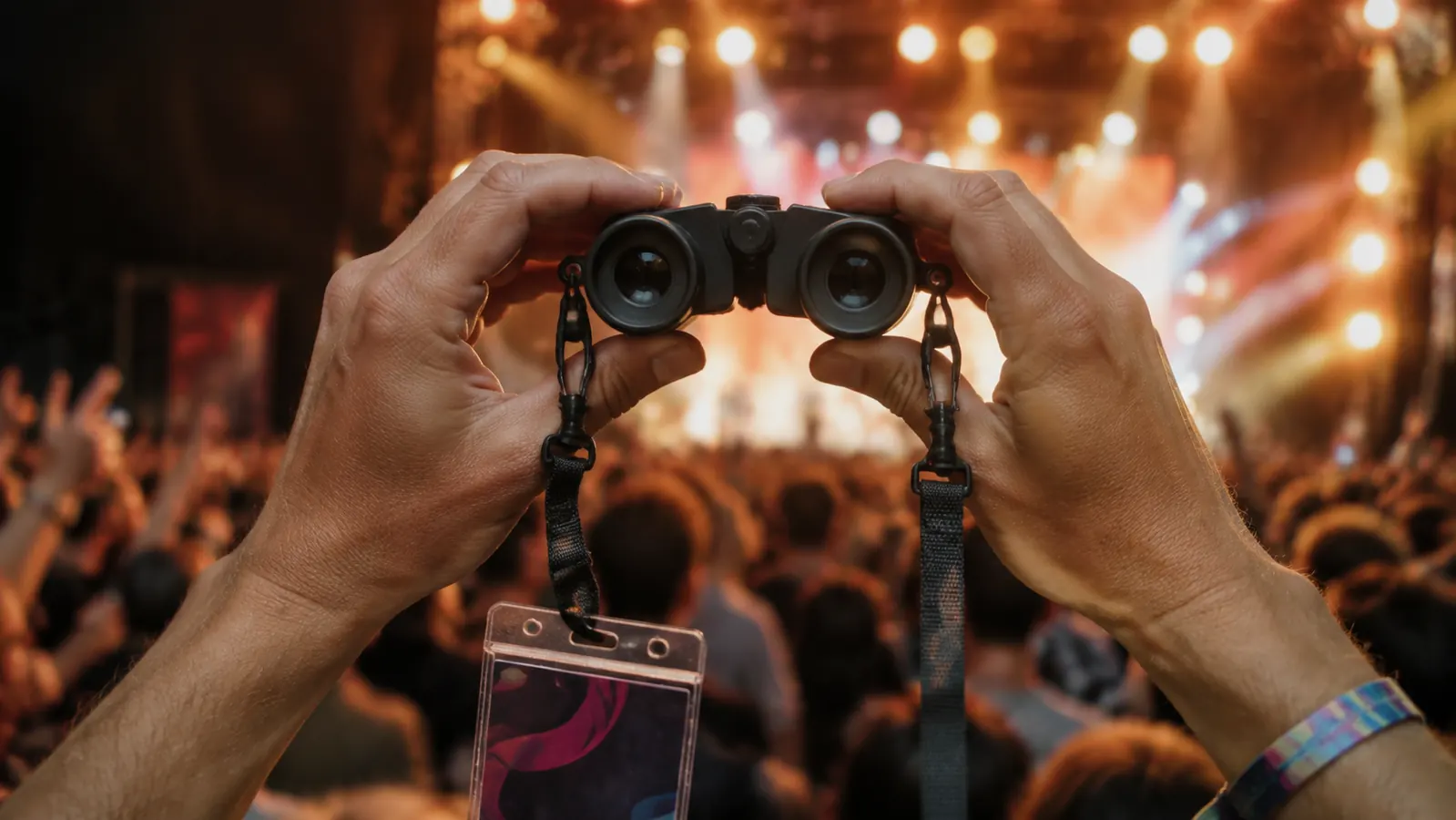
The number after the x, the 25 in 12x25, is the diameter of the front lens in millimeters. Here is the part nobody says: that number controls how much light gets into your eye, and a concert stage, especially through the middle of a big indoor house, is not as bright as you think. The bigger the second number, the more light a dim stage gives you.
But there is a fair trade for it. A larger front lens means a larger, heavier binocular, and on a long show night, weight is the enemy. A slender barrel tucks away easily and stays light in hand. A 12x25 with a small second number is a sensible, literally palm-sized pair that nails the trade-off for a lit stage. It is bright enough to catch a follow-spot and light enough to carry all evening.
If you were a birdwatcher you would want the biggest objective lens you can stand. For a concert, you want enough light and not so much weight it hurts your arms halfway through the lead guitarist's solo. My rule is, a decent-size objective on the smaller side beats a heavy one you never bother to raise.
Step 3: Buy to Hold in Your Hands, Not to Put on a Counter
A binocular is only worth anything if you can actually steady it. Now the thing nobody puts in the listing, your own hands shake more than the store picture suggests, and the higher the magnification, the more that comes across. At 12x, a small tremble is a big shaky zoom going across the whole stage.
So touch the pair before you commit. Does it feel balanced in one hand? Is the lens cover easy to slip off with a thumb? Is the focus wheel smooth and not stiff? Is the rubber grip nice to hold through a long show, even when your fingers get slick with the warmth of a room? If it feels awkward to cup in both palms from the first second, that feeling doubles by the encore. A grip that is not in the way is easily worth the small price.
The occer has a solid rubber feel and a wheel that turns easily, which is the part I honestly ruin brands on. A fun note is, bring the binocular to your eyes slowly and see the field of view, the circle you see, is it wide enough to find the singer or narrow like a straw. Wide is better. A comfortable, easy focus and a build you barely notice means you actually, finally use them.
Step 4: The Eye Relief and the Eyeglass Question
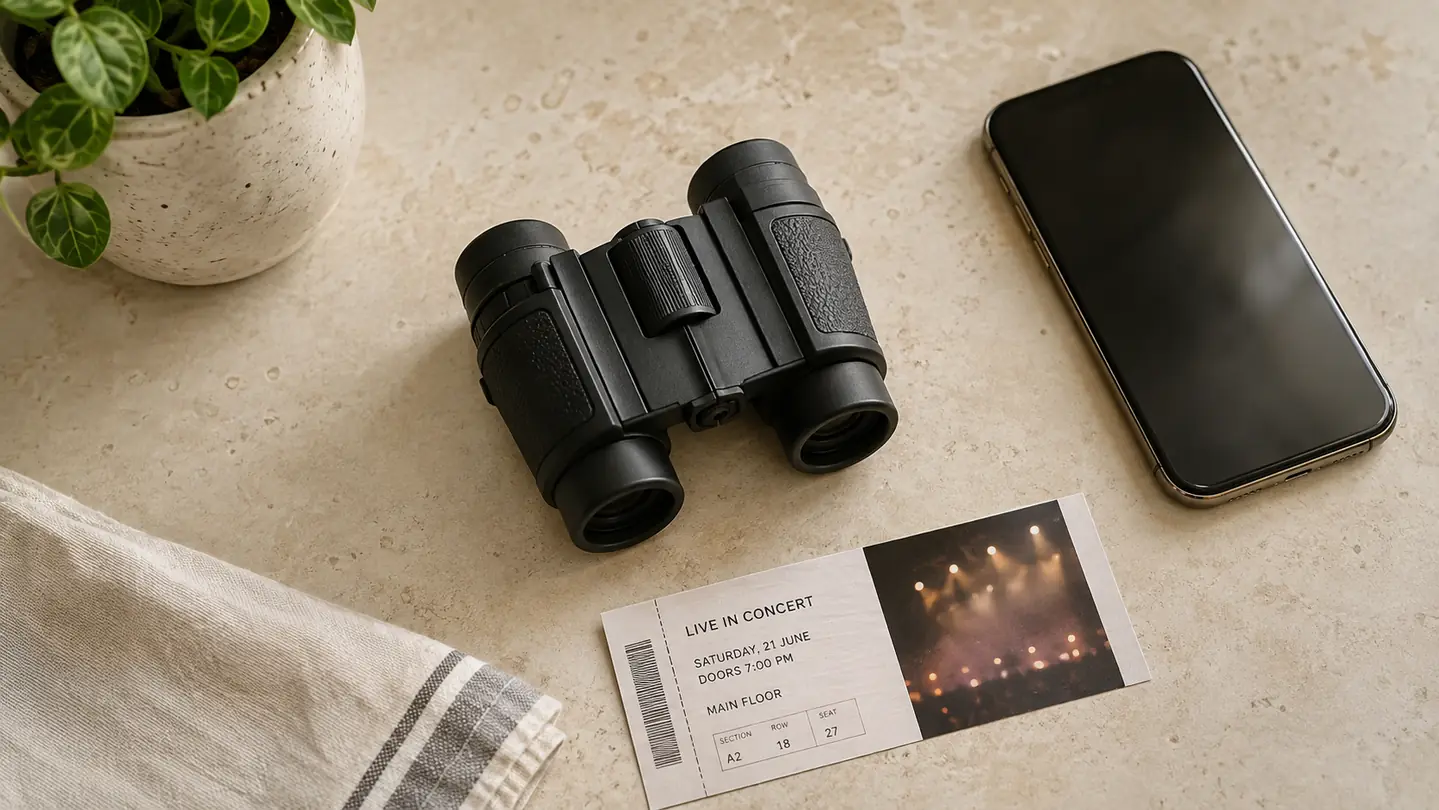
If you wear glasses, like half the people at any show including me, the eye relief is a quiet detail you cannot see on a listing, but it makes or breaks a pair. Eye relief is the space between the eyepiece and your eye where you still get the full view. On a bright lens the numbers are small to scroll past, but if it is too tight you lose the edges and you are pushing lids to see straight.
A quick honest test with glasses, hold the pair up and look through the optics while they are still on. Do the glasses bump the lens, shutting to the view? Do you have to jam your glasses or push the rubber right against them? The silicone cup on some shielded eyepieces folds out and down so you can rest it lightly without the glass edge touching and rubbing. That is the detail I now check first with my fingers, not the price.
The rubber eye cup on the occer folds, so glass wearers like me get a respectably full view without all the squint. Do not skip this. A bright pair you can see out of clearly is worth a lot more than one with a bigger number that leaves you arching over your glasses the whole night.
Step 5: Size and Case That Fit a Venue Bag and a Show Night
After all of that, the last filter is the one that rules them for me: how small and self contained it is. Big binoculars are a chore to carry, and at a concert you do not want a sleeve tugging at you all night. A compact set that lives in a little hard case, rides the inside of a clear, stadium approved bag or any satchel, and ties to a wrist to avoid the drop clack with venue sodas, is the kind that actually, year after year, makes the show.
My small pair lives in the outside pocket folded up and I put a lanyard or a light strap on it so it hangs against my chest during the clocks and the real songs. In the dark of an arena, there's nothing more frustrating than a lost lens cap rolling off and onto the floor between your feet. Ask me how I know. A little strap and a wrist loop solves that before it becomes the third guest in the crowd.
The whole point of a compact pair is that you bring it every time. If it fits your bag and sits light in your hand, it comes to every show. A pair that hides at home in a drawer handles seeing nothing. The occer compact checks those boxes, and I would trade two numbers of magnification for that built-in habit any day.
What Else Helps Actually See a Big Show
A good pair of binoculars is half the story. The rest is sitting somewhere you can use them, which more often than not, the actual ticket day. If you have lawn or upper-deck seats, a small folding stadium seat plus the binoculars covers a whole outdoor show. And if you are at a loud arena, the earplugs come out too, because a bright clear stage and a night that does not ring the bad next morning are the same night you remember.
The compact pair goes into the clear bag with the phone lanyard, and my outdoor shed days get a cushion seat. It is a kit that fits in a crossbody, and it turns a distant show into one where you know which is the flute and which is the violin, if that is your band, and of course you sing the whole time anyway.
The night I stopped squinting at a thumbnail on that Shoreline stage was when I finally bought a pair that fit my hands and my bag. That is the whole rule for a big concert house, buy for your eye, your hand and your seat, not for the biggest four numbers in the store.
The One Number That Sinks Most Binocular Picks
If there is one honest warning, it is the magnification blind spot. Bigger is not automatically better at a live show, a 12x or 10x you can hold steady beats a 20x you cannot. My 12x hits the sweet spot on most venues. The quality of the view also depends on the second number, the objective, and in a long celebrated show any decent compact that you actually only put to your eyes a lot is worth more than a lifter you leave home.
Choose the pair you will actually, gladly lift to your face all the way through the set, then match the seat, then trust it. That locked in a truly small binocular into my bag and into my show future. For my money, that is exactly the occer compact, but the rule decides it for you, your hand, your glasses, your light, your seat. That is how I choose binoculars, and it is how I stopped missing the faces.
See the Faces Again at Your Next Whatever Seats
After a season of big sheds and distant rows, my occer 12x25 compact pair is the one I keep reaching for. If you are tired of staring at a stage the size of a stamp, this is the pair that keeps stepping up for me, and it is the one I would take to the next show tomorrow.
Amazon Check Today's Price on Amazon →